Enterprise Resource Planning in India has grown well beyond back-office bookkeeping. It has become the layer businesses lean on to stay compliant, respond quickly when things change, and hold their ground in markets that only get more competitive by the year. Indian businesses work under conditions that are uniquely demanding: GST regulations, multi-state operations, thin margins, and a pace of digitisation that shows no signs of slowing. Finding the best ERP software in India isn’t about chasing the biggest brand name. It comes down to what the system can actually do: how deep its Indian compliance support goes, how well it handles the everyday mess of procurement and production, and how much space it leaves for the business to grow into.
This guide looks at what sets apart strong ERP software in India, and why a connected platform built specifically for this market, like Businet ERP software, tends to serve growing manufacturing, trading, distribution and service businesses far better than generic or patched-together systems.
The Real Challenges Growing Businesses Face
Talk to any business owner who has scaled past a certain point, in almost any industry, and the same frustrations surface again and again.
- Inventory nobody quite trusts. Stock data is located in three different places, and nobody knows the real numbers until a physical count exposes the gap.
- Compliance that takes more time than it should. GST returns, e-invoicing and e-way bills handled manually mean more hours spent double-checking than actually running the business.
- Procurement that’s nearly impossible to track. Purchase orders, vendor quotations and approvals scattered across emails and phone calls, with no single trail from request through to delivery.
- No real visibility across branches. Getting one accurate scenario of the business means waiting on several people to send through their numbers first.
Each of these costs money quietly, on its own. Together, they make growth feel a good deal less certain than it should.
What to Look for When Choosing the Best ERP Software in India
- Coverage that goes beyond inventory
A lot of software marketed as “inventory management” only solves one piece of the puzzle. What you actually need is inventory, procurement, production, sales and finance working as one, so a change in one area shows up everywhere else without anyone lifting a finger.
- Strong procurement management software built in
From vendor quotations to purchase orders, invoicing and third-party charges, procurement should be trackable end to end within the same system, not managed off to the side.
- Compliance that’s built in
GST filing, e-invoicing, e-way bills and TDS should run natively inside the platform, not through some separate tool that needs constant syncing to stay accurate.
- Real-time dashboards
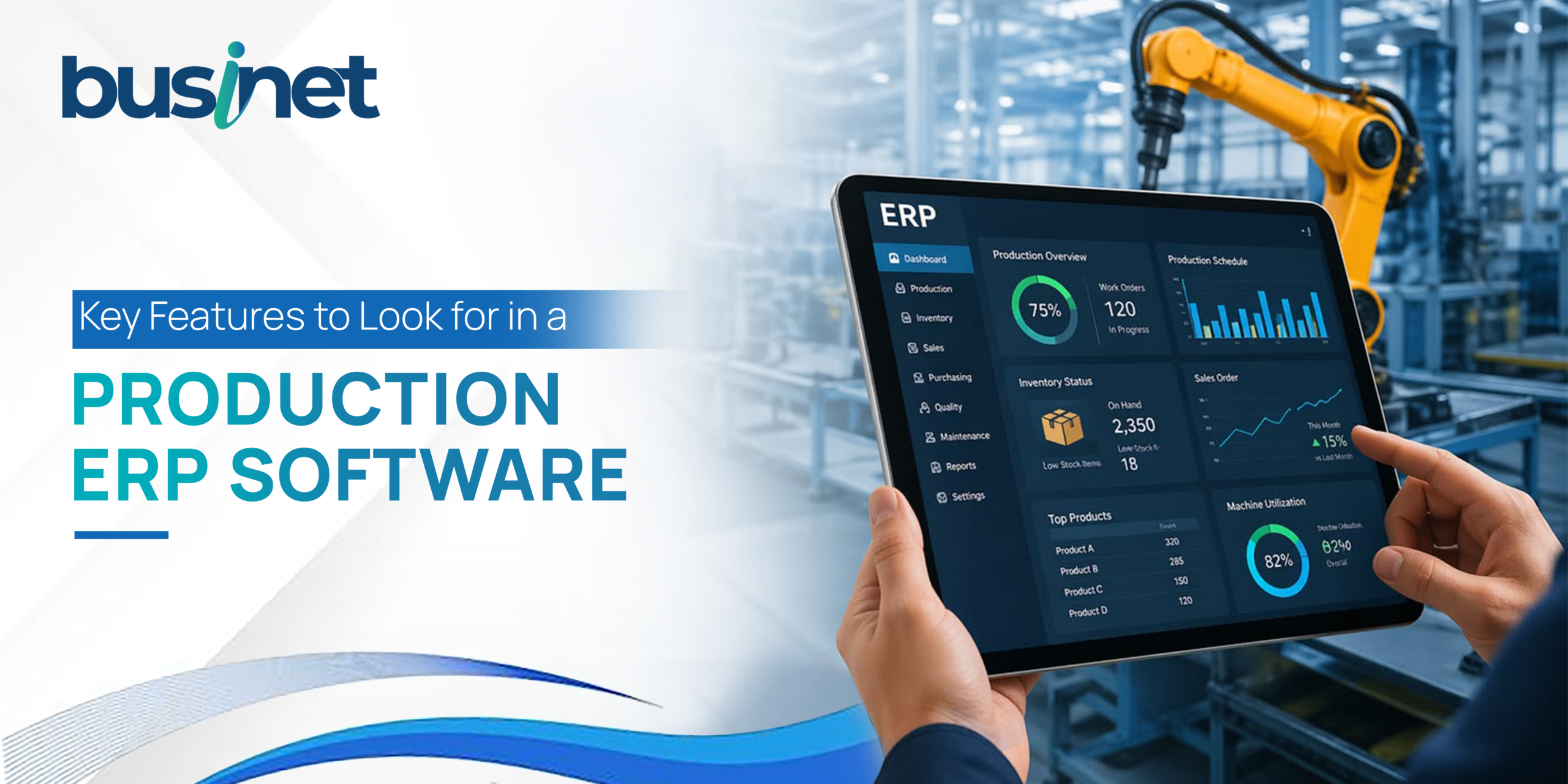
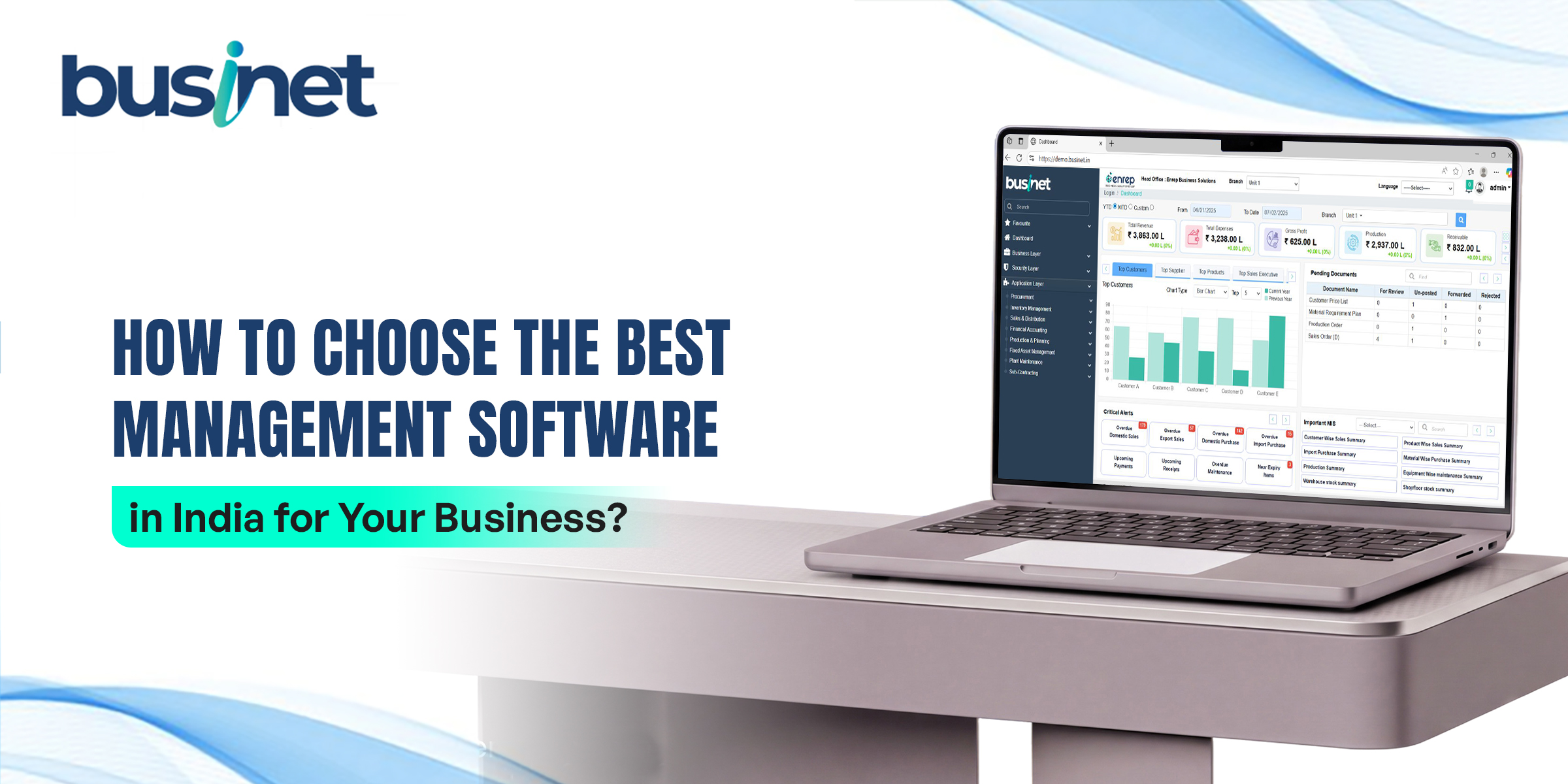
Overdue payments, low stock, pending approvals, production status: you should see all of it the moment it happens, not weeks after the fact.
- Room to grow without starting over
Whether the business runs one unit today or expects five branches within two years, the system needs to scale alongside it, without forcing an expensive rebuild down the line.
Access on the move
Approvals shouldn’t have to wait until someone’s back at their desk. A mobile app that lets managers approve requests and check numbers from wherever they are changes how quickly decisions actually get made.
Why One Platform Beats Several Disconnected Tools
This is where a lot of businesses go wrong. They buy separate tools for inventory and accounting, then stitch the two together with spreadsheets and manual entry. It holds up for a while, but every extra tool is one more place for errors to slip in, and one more thing somebody has to reconcile by hand at month-end.
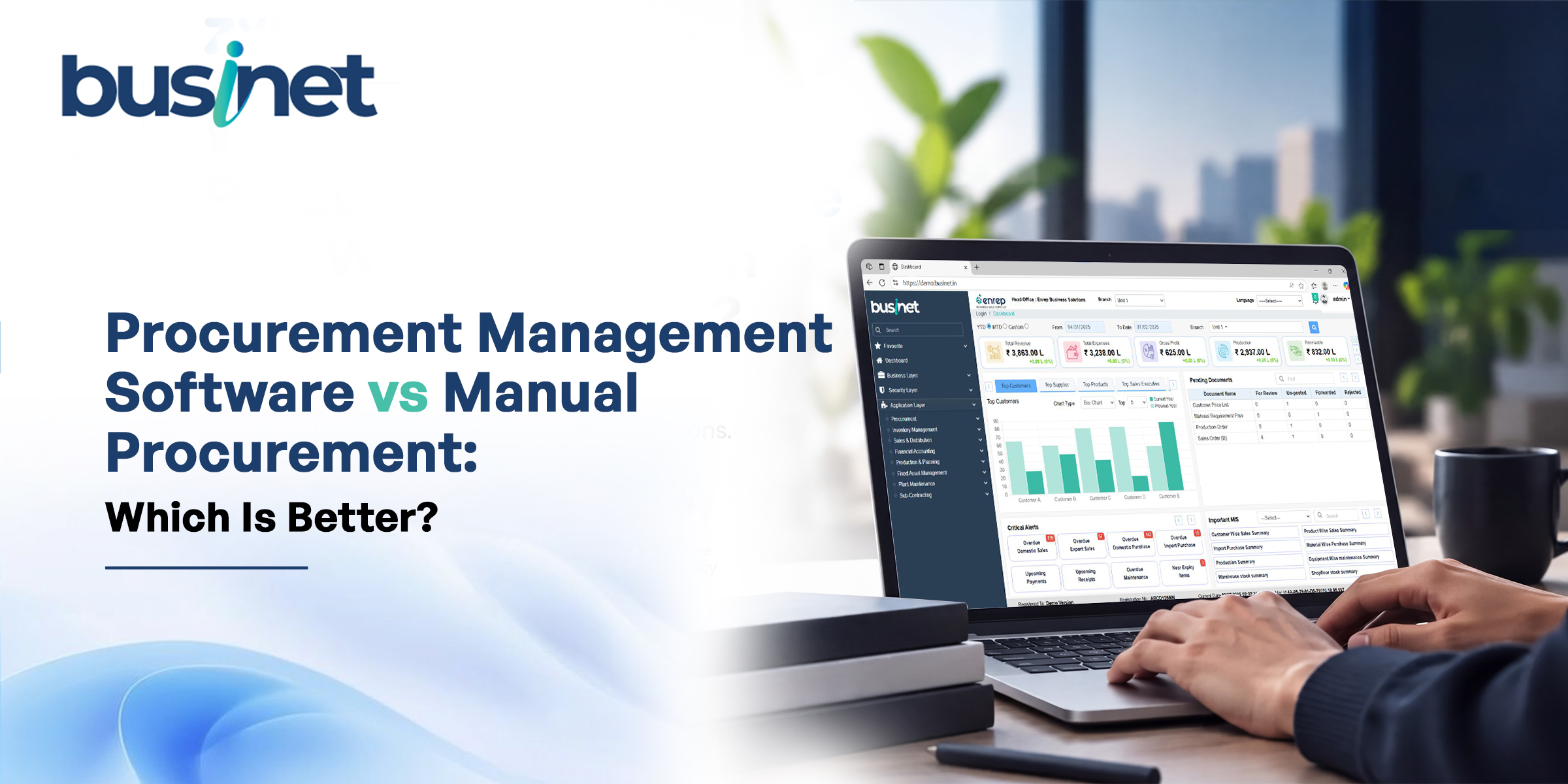
ERP software in India for manufacturing, trading and other businesses removes that friction entirely: a connected system that brings inventory, procurement, production planning, sales and distribution, sub-contracting, and accounts and finance under one roof.
That’s the gap Businet ERP software was built to close. Rather than offering inventory tracking on its own, it connects every core function on one platform, with GST, e-invoicing and e-way bill compliance built in from the start, real-time dashboards for decision-making, and an approval-based mobile app so managers are never tied to a desk.
Whether the business is in manufacturing, trading, distribution, pharma or services, and whether it runs out of a single unit or across several branches and head offices, everything comes under one view, so leadership never has to chase numbers from five different sources.
Making the Right Choice for Your Business
Choosing management software isn’t about picking whichever platform has the longest feature list. It’s about finding one that matches how the business actually runs today, and where it’s headed over the next three years.
Map out where the current setup is costing time or accuracy, whether that’s inventory, procurement, compliance or branch visibility, and start the evaluation there.
The businesses that get this right end up spending far less time firefighting, and a good deal more time actually running and growing their operations.
If the current systems are starting to feel like they’re working against the business rather than for it, it might be worth seeing what a connected platform like Businet ERP software can do for inventory, procurement, compliance and finances, all from one place. Book a free demo to see how it fits your business.
Frequently Asked Questions
1. What’s the difference between accounting software and ERP software?
Accounting software mainly tracks money in and out. ERP connects accounting with inventory, procurement, production and sales, so every department works off the same real-time data instead of records that need matching up by hand.
2. Is ERP software only useful for manufacturers?
Not at all. Trading, distribution, pharma, auto components and service businesses see just as much benefit, particularly once they outgrow spreadsheets and basic accounting tools that can’t keep pace as order volumes climb.
3. What should I look for in procurement management software specifically?
Look for a system that tracks the full purchase cycle, from quotation through to delivery, along with vendor management, invoicing and third-party charges, ideally built into the same platform as inventory and finance rather than run separately.
4. Can ERP software handle GST and e-invoicing automatically?
Yes, and it should. A properly built ERP for the Indian market handles GST returns, e-invoicing and e-way bill generation directly within the platform, cutting down on the manual compliance work that eats into a finance team’s time every month.