Traditional manufacturing systems are quickly becoming a barrier to growth for businesses that need speed, flexibility, and visibility. Heavy investments in on-premise infrastructure, disconnected departments, and slow software upgrades often prevent manufacturers from responding effectively to changing market demands.
According to Gartner research, cloud deployments now account for more than 70% of all ERP implementations worldwide, highlighting a significant shift away from traditional systems.
Today, operational agility is a major competitive advantage. This is why many manufacturers are shifting toward Software-as-a-Service (SaaS) Enterprise Resource Planning (ERP) solutions that centralise operations and provide real-time access to business data.
The Limitations of Legacy Manufacturing Systems
Many traditional ERP environments operate in silos. Sales teams, procurement departments, warehouse managers, and production planners often work with separate datasets, leading to communication delays and inefficient decision-making.
Key challenges of legacy ERP systems include:
- Disconnected departments and data silos
- Delayed communication between sales, procurement, and production teams
- Massive upfront capital expenditure (CapEx) for physical servers, hardware, and data centres
- Ongoing maintenance, upgrades, and IT resource requirements
- Risk of operational downtime during software updates
For example, when a new customer order is confirmed, production teams may not immediately receive updated demand forecasts. As a result, manufacturers can experience raw material shortages, production bottlenecks, and missed delivery deadlines.
Understanding SaaS vs. PaaS vs. Traditional ERP
As manufacturers move to the cloud, it is important to understand how different cloud models work.
- PaaS (Platform-as-a-Service) provides a cloud platform where businesses can build, customise, and manage their own applications. While the infrastructure is managed by the provider, companies are still responsible for developing, maintaining, and updating the software.
- SaaS (Software-as-a-Service) delivers a fully functional ERP solution through the internet. The vendor manages hosting, security, backups, and updates, allowing manufacturers to use the software without worrying about infrastructure or maintenance.
Unlike traditional on-premise ERP systems that require significant hardware investments and IT resources, SaaS ERP offers a ready-to-use, subscription-based solution that is faster to deploy, easier to scale, and more cost-effective for modern manufacturing businesses.
How SaaS ERP Creates a Connected Manufacturing Ecosystem?
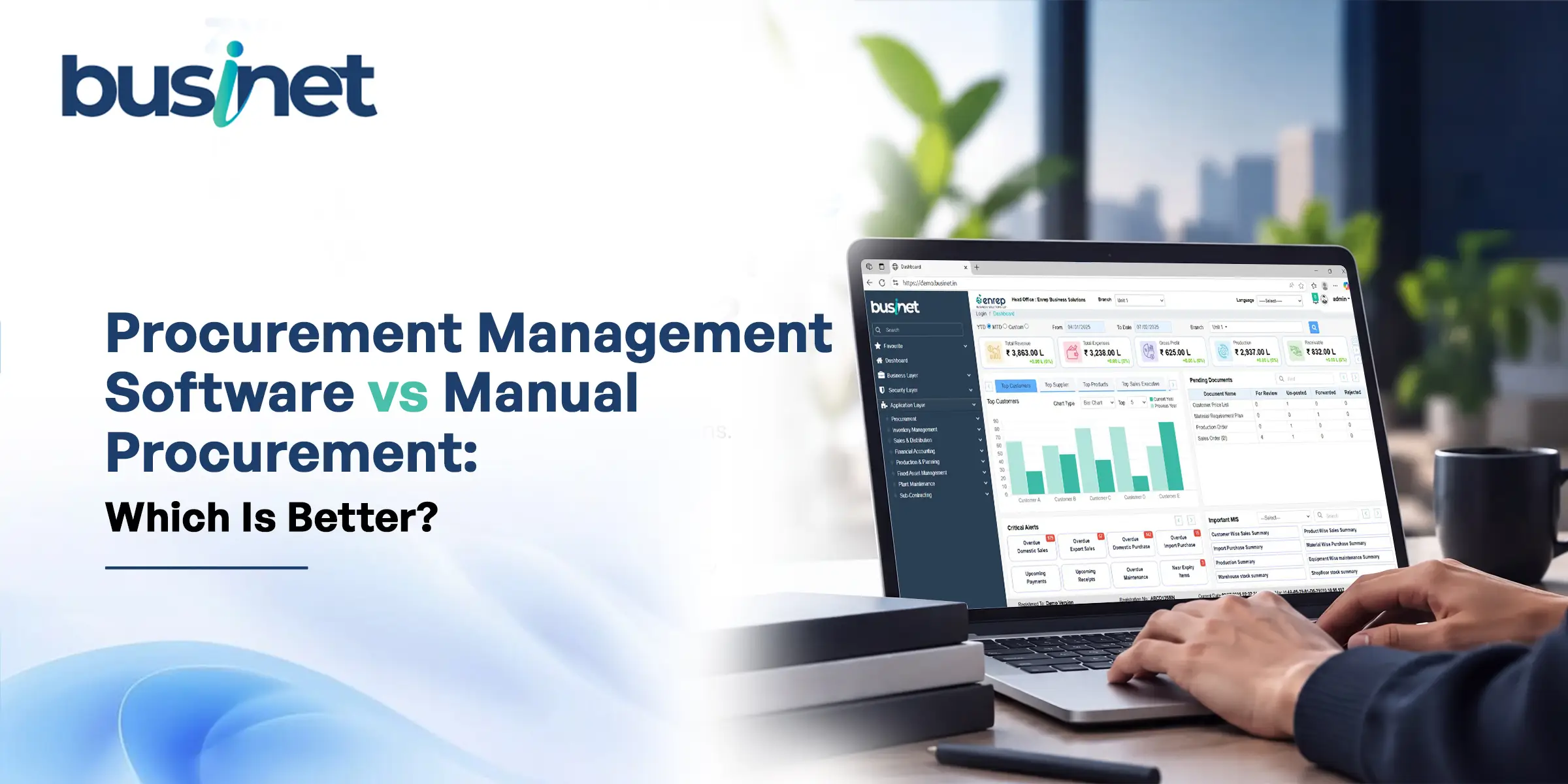
Modern SaaS ERP platforms connect procurement, inventory, production planning, finance, and sales on a single platform, giving every team access to real-time information.
Most SaaS ERP solutions operate on a per-user, per-month licensing model, allowing manufacturers to scale usage based on workforce requirements. As teams grow, additional users can be added without major infrastructure investments.
For example, when steel coils, plastic resin, or pharmaceutical ingredients arrive at the warehouse, inventory levels update automatically, enabling production teams to plan accurately and procurement teams to manage replenishment proactively.
| Process | Traditional Systems | SaaS ERP |
| Inventory Updates | Manual | Real-time |
| Production Planning | Delayed | Automated |
| Procurement | Reactive | Proactive |
| Downtime Management | Manual coordination | Instant rescheduling |
By eliminating data silos and improving visibility, SaaS ERP helps manufacturers reduce downtime, improve efficiency, and maintain on-time deliveries.
Cost Benefits of SaaS ERP for Manufacturers
One of the biggest advantages of SaaS ERP is its ability to replace large upfront investments with a flexible, subscription-based model. This helps manufacturers reduce financial risk while improving cost control.
Zero Infrastructure Costs
Unlike traditional ERP systems, SaaS ERP requires no investment in servers, database software, or on-premise IT infrastructure. Everything is hosted securely in the cloud, significantly lowering implementation costs.
Flexible Per-User Licensing
With a subscription-based pricing model, manufacturers pay only for the users who need access to the system.
- Pay-As-You-Grow Scalability: Easily add new users as your business expands.
- Predictable Budgeting: Hosting, maintenance, security, updates, and support are included in a single recurring fee.
- Reduced IT Overheads: Eliminate unexpected expenses related to hardware failures and system upgrades.
This approach makes enterprise-grade ERP technology more accessible, scalable, and cost-effective for growing manufacturers.
Industry-Specific ERP Solutions for Manufacturers
Every manufacturing sector faces unique operational challenges. Modern SaaS ERP platforms offer specialised functionality designed to address these specific requirements.
- Heavy Industrial Materials and Metal Processing
Steel mills and metal processing plants operate under immense pressure from volatile raw material costs and variable batch characteristics. Tracking raw alloy batches from the initial furnace heat to final product dimensions requires continuous data collection.
Using an unoptimised system can cause substantial waste and shipping delays. Deploying a dedicated ERP for steel manufacturing provides supervisors with real-time visibility into scrap metal recovery, furnace energy consumption, and product quality testing logs.
- High-Volume Custom Moulding and Plastics
Plastics and injection moulding facilities must balance rapid production cycles with complex multi-cavity tool management. Tool wear, regrind material utilisation ratios, and multi-layered bill of materials (BOM) changes demand precise technical control.
Implementing custom-configured ERP software for plastic industry operations enables floor managers to track tool lifecycles automatically. The system schedules preventive maintenance for machinery based on actual production stroke counts and prevents unexpected tool failures during critical high-volume runs.
- Regulated Life Sciences and Batch Production
Pharmaceutical and biotech manufacturers must comply with strict global safety guidelines, such as those set by the FDA or the MHRA. Maintaining backwards-and-forward batch traceability, cleanroom validation logs, and strict quality-control metrics leaves no room for operational error.
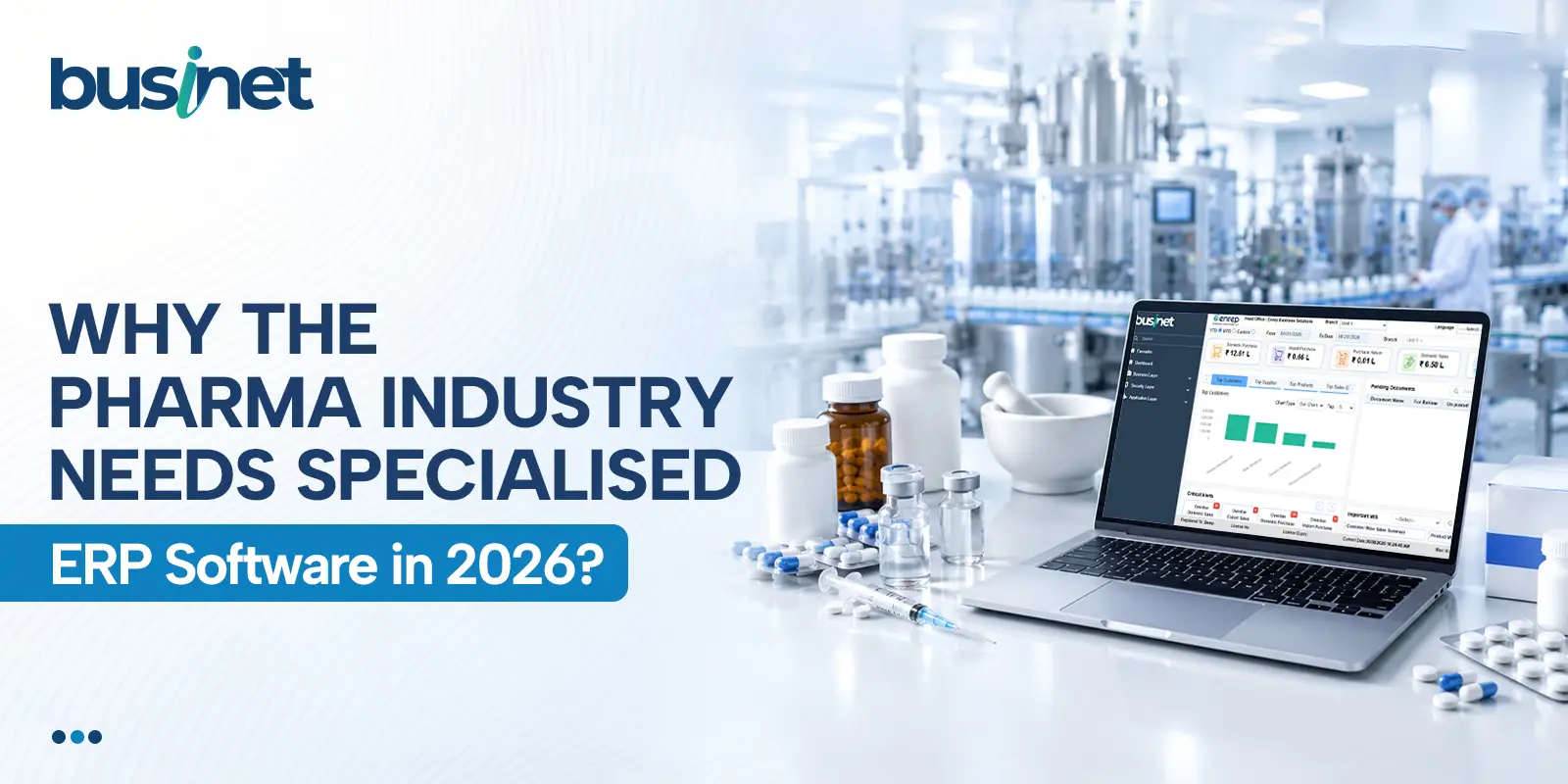
Utilising specialised ERP software for pharma industry applications automates electronic batch record documentation. The system automatically locks inventory items that fail initial purity tests, preventing unverified materials from entering active blending processes.
Enhancing Global Supply Chain Resilience
Global shipping networks remain highly unpredictable. A sudden logistics delay or vendor breakdown can quickly derail a manufacturer’s production plans. SaaS-based software provides supply chain teams with the predictive insight needed to manage external disruptions proactively.
Industrial companies can securely open their ERP platforms to external vendors, creating collaborative supplier networks. When inventory levels for a critical component drop below predefined safety thresholds, the platform automatically generates a purchase requisition and sends it directly to the supplier.
This automated communication eliminates administrative delay, ensuring components arrive at the factory before assembly lines run out of stock.
Measuring the Business Impact of Cloud ERP
The benefits of SaaS ERP extend far beyond operational convenience. Modern cloud-based ERP solutions help manufacturers improve efficiency, reduce costs, and gain greater control over business operations.
Enterprise studies indicate that manufacturers implementing cloud ERP systems achieve up to 66% improvement in operational efficiency while optimising inventory levels by as much as 91%. These gains directly contribute to stronger profitability and better resource utilisation.
Key business benefits include:
- Improved inventory accuracy and reduced stock carrying costs
- Faster production planning and decision-making
- Lower IT infrastructure and maintenance expenses
- Enhanced visibility across the supply chain
For organisations seeking the best ERP software for manufacturing in India, cloud-based platforms offer the scalability, flexibility, and real-time insights needed to compete effectively in both domestic and global markets.
Final Thoughts
A cloud-based ERP platform provides the foundation needed to streamline operations, improve productivity, strengthen supply chain management, and support sustainable growth.
Businet ERP is designed specifically to help manufacturers gain complete control over their operations through real-time visibility, intelligent automation, and industry-focused functionality.
Whether you operate in manufacturing or any other sector, Businet can help you improve efficiency and drive measurable business results. Contact our team today for a personalised consultation and discover how a cloud-native ERP solution can transform your manufacturing business.
Frequently Asked Questions
What is a SaaS-based subscription, and is per-user licensing suitable for small businesses?
A. A SaaS-based subscription lets businesses use ERP software through a monthly or annual fee without investing in costly infrastructure. With per-user licensing, you pay only for the employees who need access, making it a cost-effective and scalable solution for small and growing businesses.
1. How long does it take to implement a SaaS ERP system?
Implementation timelines typically range from 2 to 3 months, depending on business size, process complexity, and data migration requirements.
2. Is SaaS ERP suitable for small and mid-sized manufacturers?
Yes. SaaS ERP operates on a subscription-based model, making advanced manufacturing technology accessible without significant upfront infrastructure costs.
3. Can SaaS ERP integrate with existing manufacturing systems?
Modern SaaS ERP platforms support API-based integrations, allowing seamless connectivity with CAD, PLM, IoT devices, accounting software, and shop-floor equipment.
4. How does SaaS ERP improve inventory management?
SaaS ERP provides real-time inventory visibility, automated stock updates, and replenishment alerts, helping manufacturers reduce stockouts, excess inventory, and manual errors.