Many businesses collect a lot of data on a daily basis. It can be sales numbers, inventory details, purchase records, production updates, everything gets recorded somewhere. But when it’s time to make a decision, teams often face difficulties in finding answers.
Reports take time because different departments show different numbers. This is why decision makers end up relying on assumptions instead of facts.
In order to resolve all these issues, businesses need a data driven ERP. Instead of scattered information, it brings everything into one place. It helps to show what is actually happening in the business.
When the ERP system comes with a user friendly interface, teams use it comfortably without confusion. It also helps to avoid long training hours.
In this blog, we will understand the main benefits of using a data-driven ERP system.
What is a Data Driven ERP?
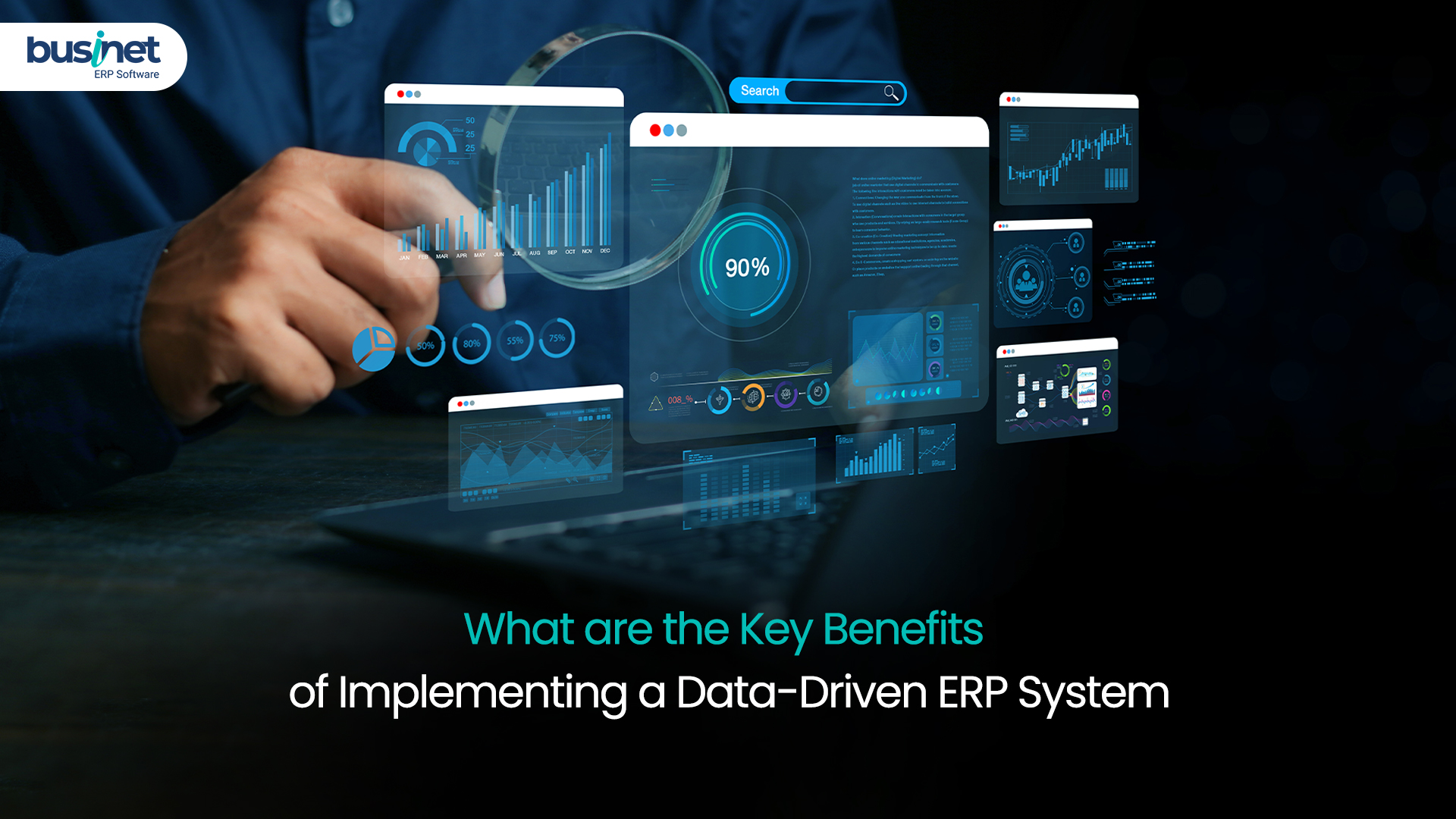
A data driven ERP is not just a system that stores business information. It is a platform that helps businesses use their data to make better decisions. Instead of collecting numbers and leaving them in reports, it turns daily business activity into useful insights that teams can act on.
In many businesses, information is kept in different places.
- Sales has its own data.
- The warehouse maintains separate stock records.
- Finance keeps another set of numbers.
But when leaders want a clear view of the business, they have to collect and compare reports from different teams. A data driven ERP brings everything together in one system, so everyone works with the same information. It also provides data and stats-based insights that stakeholders can use.
The system updates data as work happens. Managers do not need to wait for weekly or monthly reports to understand performance. They can see what is going on and respond quickly if something needs attention.
Overall, a data driven ERP helps businesses to bring clarity in daily activities. It keeps departments connected and decisions based on accurate numbers.
What Difficulties Do Businesses Face Without a Data-Driven ERP?
Without a data-driven ERP, many businesses operate in a reactive mode. Problems are noticed only after they grow large enough to affect performance. Leaders often rely on experience and assumptions because they do not have clear visibility into ongoing operations. This creates delays in action and makes planning uncertain.
Over time, this leads to several difficulties and some of them are mentioned below:
- Different departments maintain separate records, which leads to inconsistent data across the organisation.
- Management decisions rely heavily on manual reports that take time to compile and verify.
- Forecasting becomes difficult because past performance data is not easily accessible or organised.
- Errors increase when teams manually transfer data from one system to another.
- Leaders struggle to get a complete view of operations, which delays corrective action.
Major Benefits of a Data-Driven ERP System
When businesses implement a data-driven ERP system, they begin to operate with greater control and accountability. Instead of reacting to problems after they occur, teams start tracking performance more closely and managing targets with discipline. The system brings structure to daily operations and makes it easier to measure outcomes.
Here are the key benefits businesses experience with a data-driven ERP system:
- Managers get real-time visibility into sales, inventory, finance, and operations, which supports quicker and more confident decision-making.
- Forecasting improves because historical and current data stay organised and easy to analyse.
- Operational delays have reduced since approvals, reports, and updates happen within one connected system.
- Financial control becomes stronger as businesses track costs, revenues, and performance in a structured way.
- Teams collaborate better because everyone works with the same information instead of separate records.
Why Is It Necessary to Have an ERP With a User-Friendly Interface?
Even the most advanced ERP system cannot deliver results if teams find it difficult to use. In many businesses, employees avoid complex systems and return to spreadsheets or manual tracking. This reduces the value of the ERP and creates gaps in data.
An ERP with a user-friendly interface allows teams to use the system daily without difficulties. When the system feels simple, teams are ready to adopt it.
Here is how a user-friendly ERP makes a practical difference in daily operations:
- Employees learn the system faster, which reduces training time and confusion.
- Teams enter data more accurately because the interface is easy to understand.
- Managers access reports quickly without depending on technical support.
- Daily tasks become smoother because navigation is simple and structured.
- System usage increases across departments, which keeps data complete and reliable.
How Data-Driven ERP Helps in Long-Term Growth?
Long-term growth does not happen by chance. Businesses need clear direction, steady control, and the ability to adjust when markets change. A data-driven ERP supports this by giving leaders a reliable view of performance over time. Instead of reacting to problems after they appear, companies can plan ahead and move with better confidence.
Here is how a data-driven ERP supports sustainable growth over the years:
- It helps businesses set realistic targets based on actual performance data.
- It provides performance trends that support better strategic planning.
- It allows businesses to scale operations without losing visibility or control.
- It supports compliance and structured reporting as the company expands.
- It makes it easier to identify new opportunities by analysing customer and sales data.
Why Choose Businet ERP Systems for Better Outcomes?
Choosing the right ERP system is a long-term decision. Businesses need a solution that not only records data but also helps them stay organised, reduce errors, and make informed decisions.
Businet ERP is designed for growing businesses that want a system which connects every part of their operations into one unified platform.
Here are some common reasons why many businesses prefer Businet:
- Businet unifies all core business processes. It aligns everything from inventory and sales to procurement, production, and finance on one platform. This reduces data gaps and improves clarity across teams.
- The system gives real-time insights through dashboards and detailed reports. It helps leaders make faster and more accurate decisions.
- Businet automates everyday tasks, such as stock updates, approvals, and financial reports. This allows us to save time and reduce manual errors.
- Its design supports multiple locations and branches. It keeps inventory and operations synced across all units.
- Beyond technology, Businet provides ongoing support, including onboarding help and consultations.
A data driven ERP system helps businesses use daily information in a practical way. Instead of waiting for reports or making decisions based on assumptions, teams work with updated and reliable numbers. This brings better control and more confidence in everyday decisions.
When the system also comes with an ERP with a user -friendly interface, teams feel at ease while using it. As a result, adoption improves, and every department benefits from more organised and consistent work.
If your business wants to get rid of scattered data and needs structured insights, connect with Businet.