As businesses grow, numbers grow with them. Sales reports become longer, expense sheets expand, and performance data spreads across different files and departments. At first, teams manage with spreadsheets and manual summaries. But over time, preparing reports starts taking more effort than expected. By the time leaders receive the final numbers, the situation may have already changed.
This is where reporting software becomes important. Instead of collecting data from different sources and compiling it manually, businesses can view organised and updated information in one place. Clear reports help leaders understand what is working, what needs attention, and where improvements are required.
In this blog, we will understand what reporting software is, how it works, and why growing businesses rely on it.
What Is a Reporting Software?
Reporting software is a tool that businesses use to collect and present their data in an organised way.
Instead of going through multiple spreadsheets or asking different departments for updates, teams can view data whenever they want.
The purpose of reporting software is to help businesses see different patterns and compare results. Further, they can also track progress over time. It converts raw data into reports that are easy to understand.
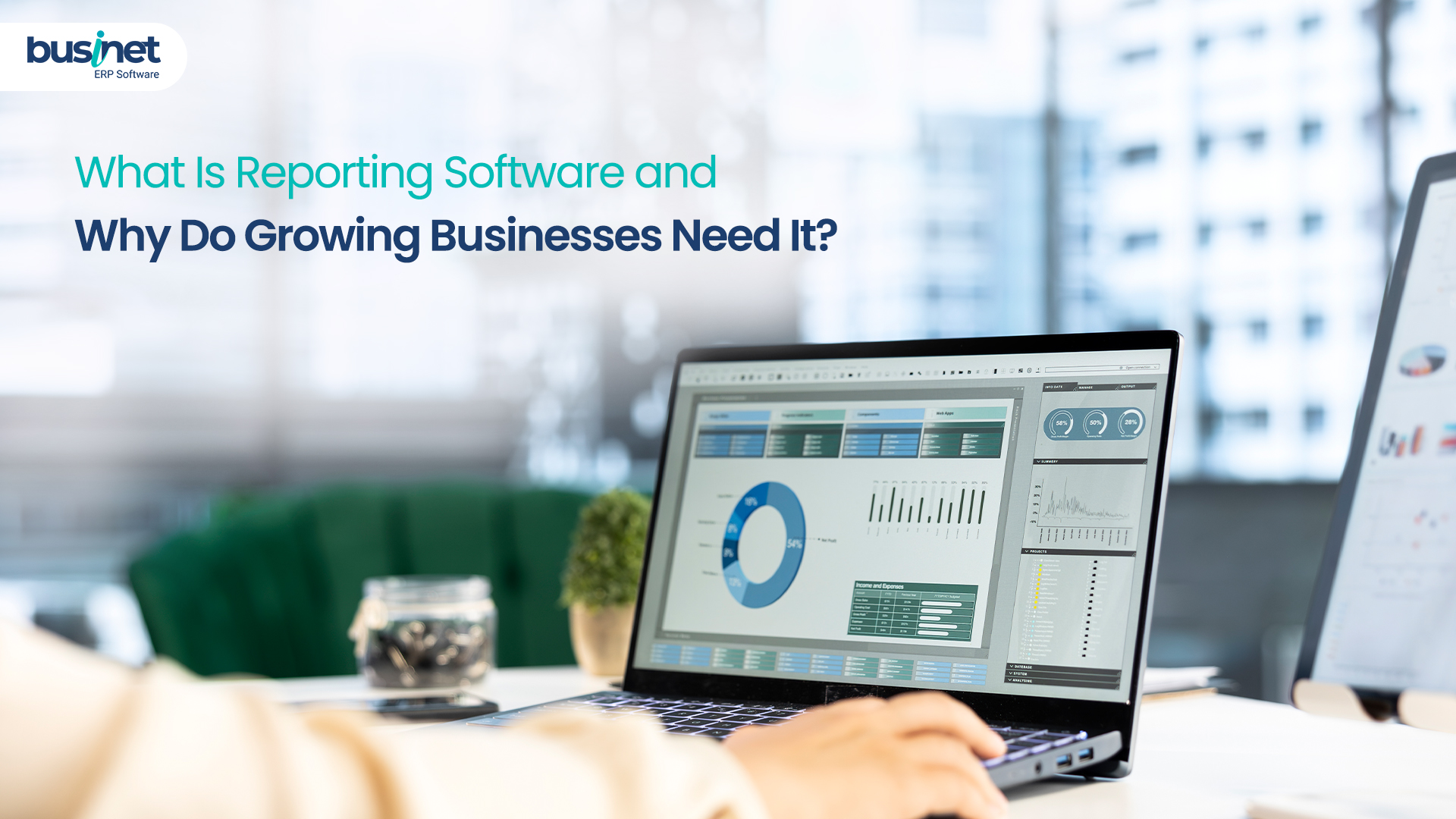
A reporting software gathers information from different business activities. It can be from sales, expenses, inventory, and operations. It then arranges this information into summaries, charts, or dashboards, whichever businesses prefer. This allows seniors to quickly understand performance without spending hours preparing manual reports.
Why Do Businesses Need Reporting Software?
When your business starts to grow, things naturally get messier. You start handling more orders and spending more money. Moreover, your team’s data ends up scattered everywhere.
If you can’t see what’s actually going on, it becomes difficult to make informed decisions. At this stage, a reporting software can significantly help. It helps you to stay informed about what’s happening in your business.
Here is how reporting software helps businesses to manage daily processes and data:
Improves Decision-Making
When managers have clear and updated reports, they make decisions based on facts instead of assumptions.
They can quickly understand sales performance and expense trends. Further, they can avoid operational gaps and respond without delay.
Saves Time and Reduces Manual Effort
Preparing reports manually takes time and often requires collecting data from different departments. Reporting software generates reports automatically. This reduces repetitive work and allows teams to focus on more productive tasks.
Increases Financial Control
Businesses seeing growth in their operations require better control over revenue, expenses, and cash flow.
Reporting software helps track financial data in a more clear way. This makes it easier to monitor costs and maintain financial discipline.
Supports Performance Monitoring
As teams grow, tracking performance becomes more important.
Reporting software helps measure targets, compare results, and identify areas that need improvement. This ensures that growth stays aligned with business goals.
Common Reporting Challenges Without Reporting Software
When businesses depend only on spreadsheets or manual reporting, small gaps start creating bigger problems.
Reports take longer to prepare, and different departments may present different versions of the same numbers. This creates confusion and slows down decisions, which matters a lot.
Some common challenges may include:
- Reports require manual data collection from multiple teams.
- Numbers do not always match across departments.
- Errors occur while copying or consolidating data.
- Leaders receive reports late, which delays action.
- Tracking branch-wise or department-wise performance becomes difficult.
Main Features to Look for in Reporting Software
Not all reporting tools offer the same features. Businesses need software that keeps reporting simple, accurate, and easy to manage.
When selecting reporting software, one should always look for the following points:
- Real-time data updates to ensure reports reflect current performance.
- Customisable dashboards that match business needs.
- Easy integration with sales, finance, and inventory systems.
- Clear and simple interface that teams can use comfortably.
- Multi-branch or multi-location reporting capability if the business operates across locations.
How Businet’s Reporting System Supports Growing Businesses
Businet’s ERP system includes structured reporting tools that consolidate business data into a single, connected platform.
Instead of preparing separate reports for finance, inventory, and sales, businesses can access organised dashboards. With this, teams can find summaries within the system.
Businet supports real-time reporting across departments and locations. This helps business owners monitor performance, track financial data, and review operational metrics without depending on manual consolidation.
The system keeps reporting practical and easy to understand. This helps growing businesses stay coordinated and informed.
In conclusion, nowadays businesses need clear and organised reporting. When numbers stay scattered or reports arrive late, decisions suffer. Reporting software brings structure to this process by organising data in one place and presenting it clearly. It saves time, reduces errors, and helps leaders understand performance without confusion.
For growing businesses that want better control and simpler reporting, solutions like Businet’s reporting system offer a practical way to stay organised and make informed decisions with confidence.